Could I Really Fit In Here? How Small Towns Make Room for Newcomers .
DWELL
Here is a thing you can often feel within an hour of arriving in a town: whether there is a way in.
Not whether the buildings are pretty. Not whether the coffee is good, though coffee does have a way of becoming a civic utility. The deeper question is this: if I came here as a stranger, would I know where to begin?
A great small town does not simply offer scenery. It offers entry points: a Saturday market, a volunteer sign-up, a bookstore bulletin board, a shopkeeper who asks where you are visiting from and actually waits for the answer.
Belonging in a great small town is not inherited. It is built.
That said, we could name some towns where the longtimers think otherwise. It is a reality, but we have found that they can be won over.
Look for the Gathering Places
The best small towns have “soft openings” into community life.
Farmers markets. Coffee shops. Church suppers. Library programs. Downtown concerts. Festivals where half the town seems to be carrying a folding chair.
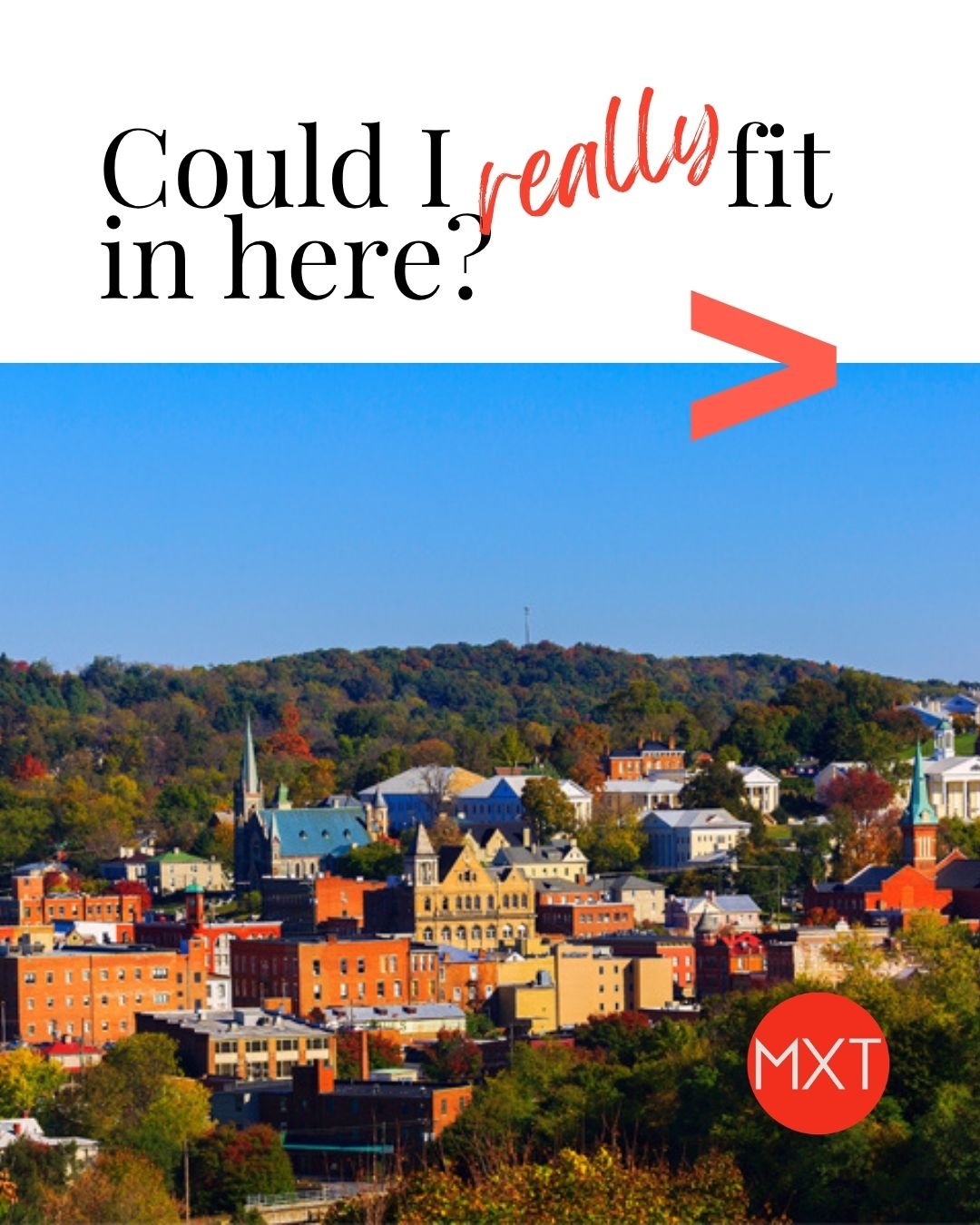
Staunton, Virginia offers a useful example. Its Staunton Farmers’ Market runs seasonally on Saturday mornings, giving locals and visitors a natural place to gather, shop, talk, and linger.
That matters.
A farmers market is not just a place to buy tomatoes. It is where a newcomer learns who grows them, who makes the bread, which musician plays on Saturdays, and whether people stay awhile.
Look for the lingering.
Look for the Welcome Layer
Some towns are friendly in theory. Others have actual ways for people to plug in.
That welcome layer might look like newcomer events, volunteer orientations, church or civic programs, an active library calendar, a downtown organization, or a tourism site that keeps current information easy to find.
Staunton’s Visit Staunton site regularly highlights events, performances, tours, and downtown experiences. Its downtown also supports public-life programming such as Shop and Dine Out Downtown, a seasonal program that gives restaurants and businesses more outdoor room to serve, sell, and invite people to stay awhile.
Other towns, like Woodstock, Vermont have an actual bulletin board in the heart of town to keep everyone informed of the weeks events.
I love the story of the southern newcomer who moved to Vermont. It was an early friend who knew the sometimes grueling effect of winter who told her to “find something to do outside of your home, so you have to go out.” That southern newcomer is now a driving force in the local theater and manages the most luxurious inn in town. It is home for her now.
That is not just tourism polish. It is civic choreography.
Look for Third Places
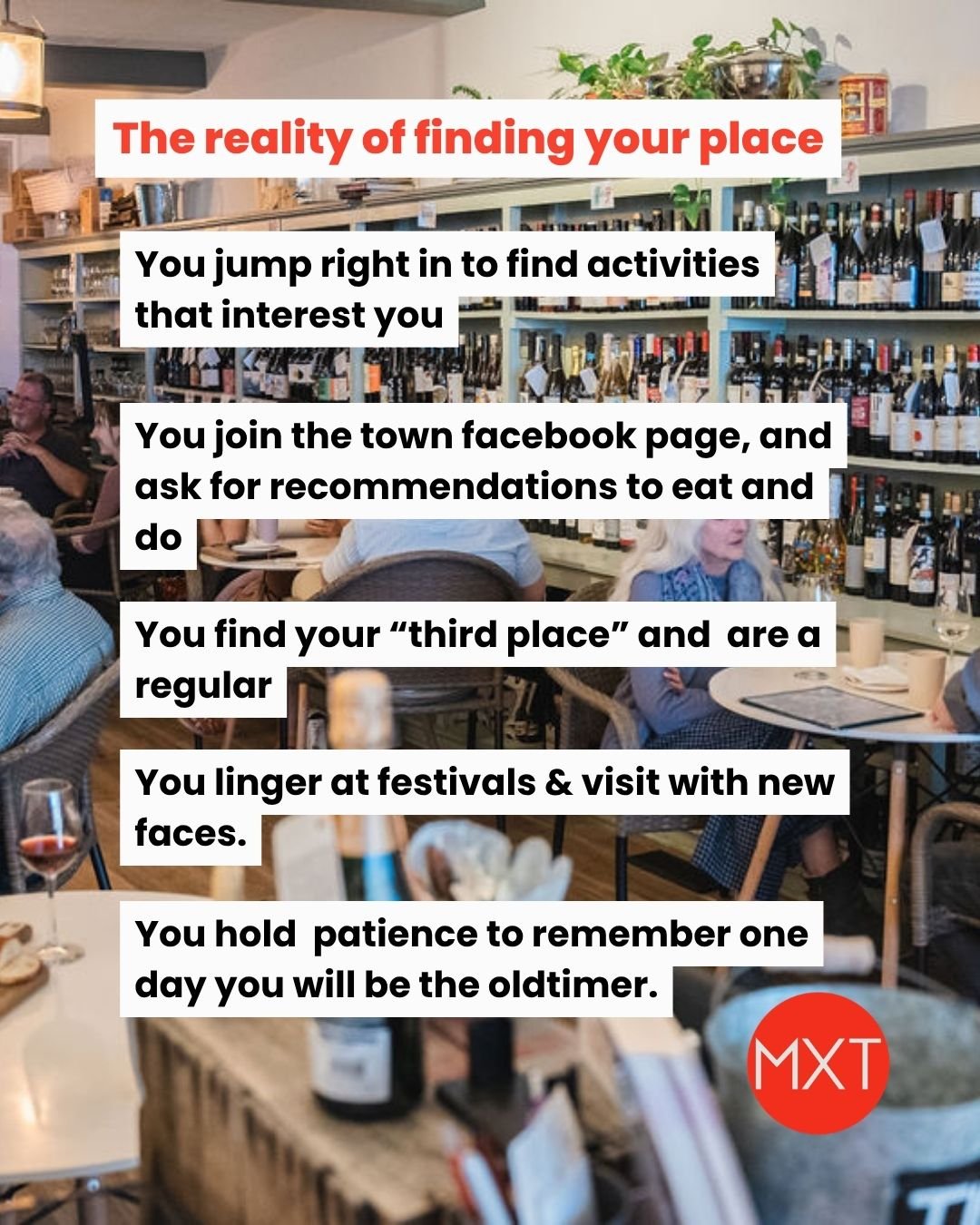
A “third place” is neither home nor work. It is the café where regulars rotate through like a gentle parade. The bookstore with the event flyer. The wine shop with tastings. The library table where someone always seems to know what is really happening.
Third places are where community becomes legible.
They are also where newcomers move from “I live here” to “people would notice if I missed Tuesday.”
That shift takes time. It should take time. Belonging is not Amazon Prime.
The Newcomer Has a Job, Too
A warm town can open the door. It cannot walk through it for you.
You have to go to the market. Join the group. Attend the festival. Ask for recommendations. Volunteer. Return to the same coffee shop often enough that someone remembers your order.
And please, for the love of all folding chairs, do not move to a small town and immediately announce how everything was better where you came from.
Learn the rhythm first.
Every town has its own operating system. Some run on school calendars. Some run on church suppers. Some run on festival committees. Some run on one person named Linda who knows where the extension cords are.
Find Linda.
What We Watch For
When we look at a small town through the Dwell lens, we are not only asking whether it is attractive. We are asking whether it is livable.
Can a person build a life here without needing a family tree as a passport?
The signs are usually visible:
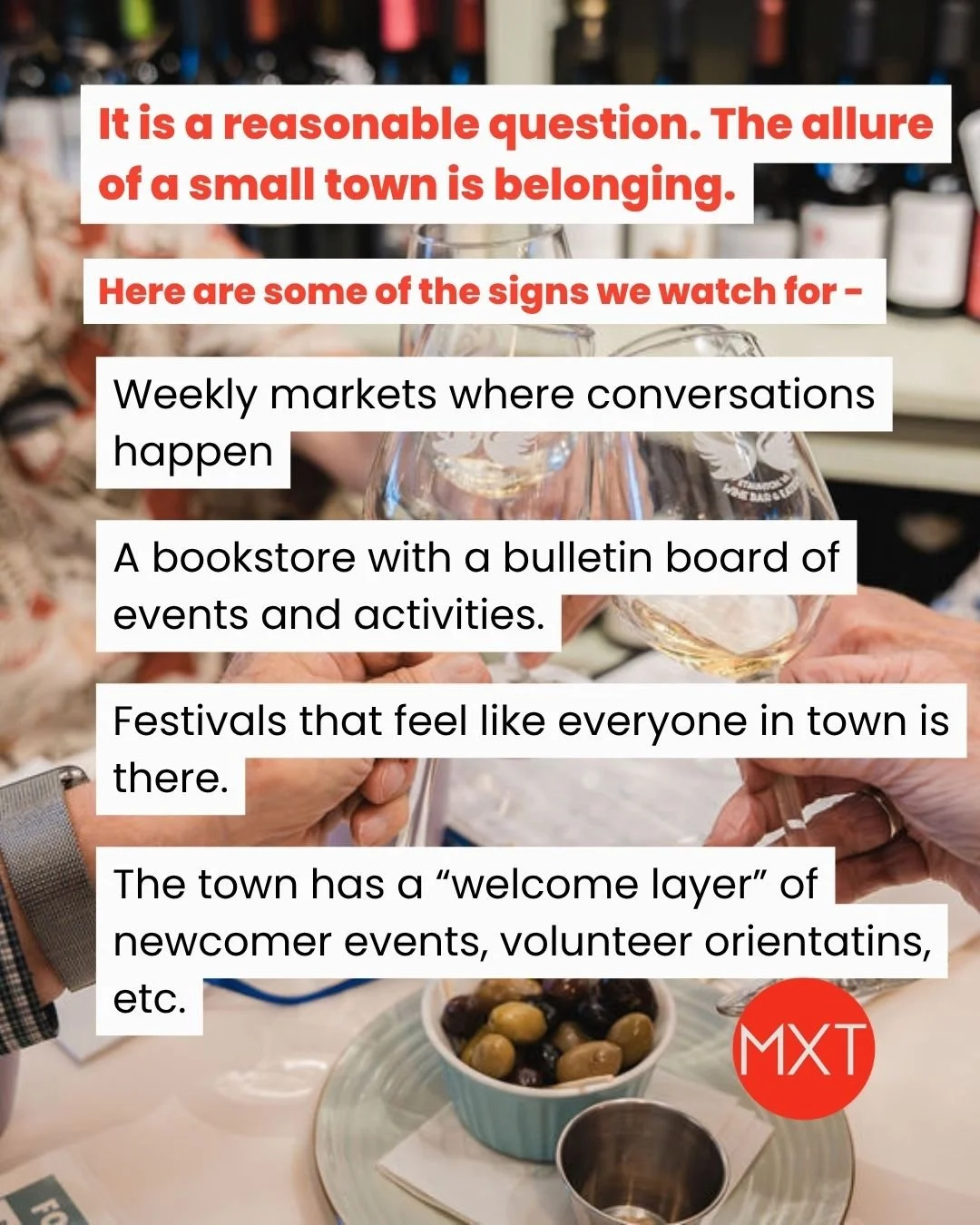
Weekly markets where conversations happen.
Independent shops that double as informal welcome centers.
A bookstore or coffee shop with a real bulletin board.
Festivals that feel local, not manufactured.
Volunteer opportunities that are easy to find.
A downtown where people move at human speed.
Public spaces that invite lingering.
These are not decorative details. They are infrastructure for belonging.
The MoxieTowns Take
The small towns worth watching are not the ones pretending to be perfect.
They are the ones making room.
Room for visitors to wander. Room for entrepreneurs to try. Room for families, retirees, remote workers, artists, shopkeepers, volunteers, and regular people who want a life with more texture than errands and inboxes.
A great small town does not guarantee belonging.
But it gives you a way in.
And sometimes that is enough to begin.