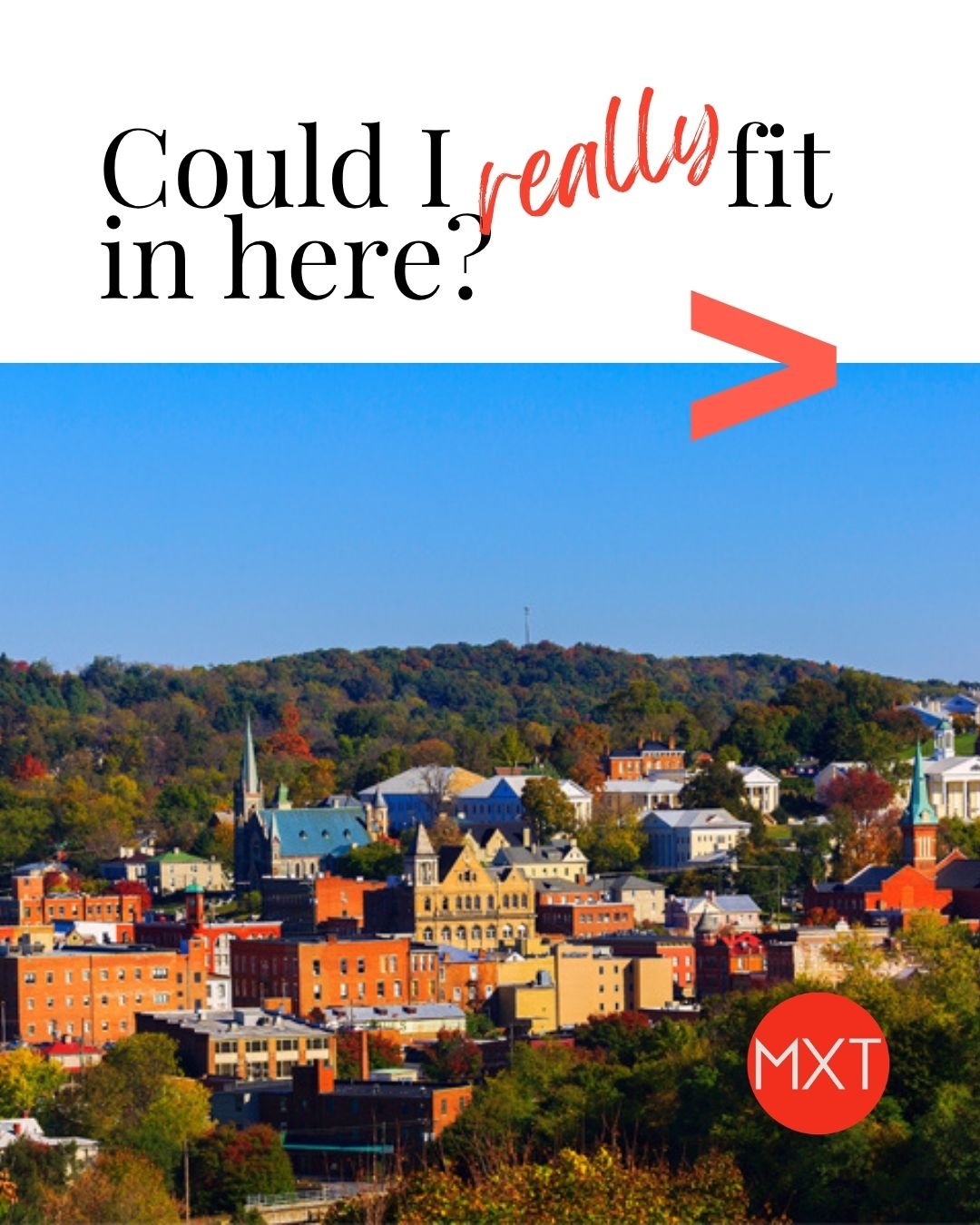
Behind the numbers: Staunton, VA
DWELL
The demographic figures in this post are based on a 3-mile radius from the center of town—not just within city limits. Why? Because life doesn’t stop at the welcome sign.

A Blue Ridge Beauty with Brains, Balance, and Backbone
Staunton isn’t in a hurry. It doesn’t have to be. Tucked into the Shenandoah Valley with postcard-perfect streets and an old-soul sensibility, this small town of just under 29,000 has carved out a calm kind of confidence.
With a population growth of just 0.48% since 2020, Staunton is growing gracefully—not booming, not shrinking, just thoughtfully growing its community. The median age is 42.4, and you get the sense people here didn’t happen here—they came and stayed on purpose.
A Town That Knows Its Worth
Staunton’s economic profile is refreshingly grounded. The median household income is $59,752, and the average is $83,046—about a 39% spread, hinting at a mix of working households, upward mobility, and long-time locals who’ve seen housing values rise with the seasons.
Homeownership is steady at just under 60%, and median home values land at $283,180 (though the average edges closer to $376K). It’s still affordable by national standards, especially when you factor in a housing affordability index of 87 and a low unemployment rate of 2.9%. Translation: people here are making it work—and making it home.

The Texture of Everyday Life
With a crime index of 84 and a healthcare access index of 78, Staunton offers a balance of safety and support—especially important for a town with a broad age range and growing intergenerational mix. Religious attendance sits around 46%, and 44% of adults 15+ are married.
Cultural engagement leans thoughtful and civic-minded, with political affiliation spread across the spectrum: 35% conservative, 25% liberal, and 40% somewhere in between. The kind of place where front porch debates might end with borrowed sugar.
Education, Industry, and Unshaken Pride
Staunton’s retail economy clocks over $308 million a year, powered by $808 million in aggregate disposable income. The historic downtown district isn't just charming—it’s productive. Anchored by independent shops, cultural venues, and a strong hospitality presence, the town’s economic engine is as local as it is loyal.
The educational attainment rate includes nearly 38% with a bachelor’s degree or higher, and the town’s generational mix includes a strong showing from Boomers and Millennials alike. The result? A place where both analog values and digital possibility coexist.
Why Staunton?
Because it makes a strong case for sustainable small-town living. With affordable homes, a healthy economy, and a steady heartbeat, Staunton invites you to invest in something deeper than speed or size.
If you’re looking for a town where you can know your neighbors, walk to a coffee shop with history in the walls, and build a life at your own pace—Staunton just might be your place.

The demographic figures in this post are based on a 3-mile radius from the center of town—not just within city limits. Why? Because life doesn’t stop at the welcome sign.
Using this standard radius lets us compare small towns apples-to-apples—capturing the true local footprint where people live, shop, worship, and connect. So if the numbers seem a little broader than official city stats, that’s by design. We’re measuring community, not just boundaries.
Our data comes from the Census, ACS, and ESRI